Two Jewish tales concerning righteousness
By Rabbi Baruch Lederman

Rabbi Baruch Lederman
SAN DIEGO — Hillel says: Do not judge your fellow till you have reached his place. (Avos 2:5)
If we are sensitive to understand what others are going through, if we can feel the pain, hardship, trials and difficulties that others feels; we will respond with greater love and
compassion, as the following true stories illustrate:
The whole of Yerushalayim (Jerusalem) was in an uproar! A well-known man, a member of the Belzer Chasidic sect, and his wife had just given birth to their first child – a boy – after being childless for twenty-eight years! The sholom zachor (party in honor of baby boy held the Friday night before the bris) that Friday night was the event of the year. Well over a thousand people came by to wish Mazel Tov to the proud and exhausted father. The food supply ran out in short order as did the drinks, but no one seemed to mind. At the height of the celebration, the crowd quieted down as the father indicated that he would like to say a few words.
He began in a loud voice, “Thank you all for coming and sharing in the simcha (joyous celebration). Although I have no more food to offer, let me at least tell over a story which I’m sure you’ll appreciate.”
The ecstatic new father composed himself and continued. “When I was a bochur (unmarried student) learning in the Belzer Yeshiva , there was a cleaning lady who would come by every day to tidy up and scrub the Beis Medrash and adjoining rooms. She was a fixture in the yeshiva and devoted her life to maintaining the yeshiva building. She was, however,
not a wealthy person by any stretch and as her own family grew, she was at a loss of options as far as taking care of her children. She decided to bring her kids with her to work, and as she cleaned and mopped in one area of the building, the young children would run amuck, screaming, crying and generally causing quite a commotion, in the rest of the
yeshiva. At first, we put up with it; we even thought it was cute for a time. But after a while, the kids really began to ‘shter’ (disrupt) us in our learning and davening. Try as we might to control them, they wouldn’t listen and continued on in their childish games and noise. A number of younger bochurim (students) asked me, as one of the oldest in the chaburah (group), to ask her not to bring her children anymore to the yeshiva
“I agreed to talk to her and I brazenly walked up to her and told her that her kids were disturbing everyone in yeshiva and she should find some sort of alternative method of child-care for them. I’ll never forget how she looked at me with tired eyes and said, ‘Bochur , you should never have tzaar gidul bonim (the pain and anguish that one goes through
when raising children.) The crowd gasped.
“As many of you know,” continued the father, “my wife and I have been to countless doctors who’ve recommended every sort of treatment. We moved abroad for awhile to be near an ‘expert’ which proved to be fruitless. One last, extreme treatment was offered and after trying that, it too, turned out to be just a fantasy; we felt doomed to a life without the
pleasure of raising a yiddishe family.
“After that last attempt, as we walked back into the apartment that we lived in for the past twenty-eight years, our entire sad situation hit us full force, like a ton of bricks. Together, we broke down crying. I suddenly remembered the incident with the cleaning lady. I realized how insensitive I was to her plight and pain. I decided to ask for forgiveness. But how? I spent hours on the phone until I came up with an address, which I ran over to immediately. She did not recognize me obviously, but when I told her over the story, a spark flickered in her eyes. I tearfully apologized for my harsh words and she graciously forgave me with her whole heart.”
Beaming from ear to ear, the father announced, ” Rabbosai, that took place exactly nine months ago!”
–
The famous Chassidic leader referred to as “Der Rebbe Reb Zisha” was known for his profound cleverness and for constantly being in search for more Mitzvahs, as the following true story, submitted by Avraham Moshe HaCohen Adler, illustrates:
Someone once handed Reb Zisha an envelope consisting of a present for him of ten Rubles. Reb Zisha was delighted to receive such a nice gift, but he was stuck with one problem. Since Reb Zisha was a very poor man and seldomly handled sums of money as large as this one, he never needed to buy a safe. He had no safe place to keep the money. After pondering the situation for a few minutes, Reb Zisha decided to sit down and learn a little before returning to his problem. That week was Parshas Yisro. Reb Zisha opened his Chumash and began reading. When Reb Zisha reached the Passuk, “Lo Tignov – Thou shalt not steal” he stood up and said, “Yes! This is the answer to my problem.”
I will put the money in my Chumash next to where it says, “Do not steal” and when a thief comes to take the money he will read what it says and surely won’t touch it.
The next day Reb Zisha came back to check on the money, to his astonishment the money was missing. Reb Zisha wondered how someone could anger Hashem so, when it said right there, “Do not steal.” Reb Zisha put down his Chumash and was about to leave when he noticed something was stuck inside. He turned to the page it was stuck in, and found some money. He found five Rubles. Exactly half the amount he left in the Chumash the day before. He read the Passuk on that page, “V’Ahavtah L’Rayacha Kamocha – Love your neighbor like yourself.” Reb Zisha stood up and sighed, “Oy! Look he is a bigger Tzadik than I. I had ten Rubles and kept them all for myself. He had ten Rubles and shared them equally with his friend.”
Dedicated by Rabbi & Mrs. Zvi Fruend on the occasion of the Yahrtzeit of his father Abe Freund, Avraham ben Moshe Yechiel.
*
Rabbi Lederman is spiritual leader of Congregation Kehillas Torah in San Diego
8 American Muslims tour concentration camps, oppose Holocaust denial
NEW YORK (WJC)–Eight Muslim American leaders, who visited the sites of former Nazi concentration camps and met with Holocaust survivors earlier this month, have signed a statement condemning Holocaust denial and anti-Semitism. The trip, intended to teach the participants about the Holocaust, featured visits to the Dachau and Auschwitz camps.
“We stand united as Muslim American faith and community leaders and recognize that we have a shared responsibility to continue to work together with leaders of all faiths and their communities to fight the dehumanization of all peoples based on their religion, race or ethnicity,” the statement read. “With the disturbing rise of anti-Semitism, Islamophobia and other forms of hatred, rhetoric and bigotry, now more than ever, people of faith must stand together for truth.”
Marshall Breger, a Jewish former member of the Reagan and Bush administrations, launched the trip to educate those who may not have had the opportunity to learn the history of the Holocaust. Breger said this would help combat Holocaust denial among Muslims.
The leaders on the trip were five imams – Muzammil Siddiqi of California; Muhamad Maged of Virginia; Suhaib Webb of California, Abdullah Antepli of North Carolina, and Syed Naqvi of Washington DC – along with Sayyid Syeed of Washington, Sheikh Yasir Qadhi of Connecticut, and Laila Muhammad of Illinois. US government officials, the State Department’s special envoy to monitor and combat anti-Semitism, and an official from the Organization of the Islamic Conference also participated in the trip.
According to the ‘Forward’ weekly newspaper, several of the leaders had a history of anti-Semitic comments. Laila Muhammad is the daughter of American Muslim leader W.D. Muhammad and granddaughter of Elijah Muhammad, leader of the controversial Nation of Islam. The trip was co-sponsored by a German think tank and the New Jersey-based group Interreligious Understanding.
*
Preceding provided by World Jewish Congress
Iranian pulls out of medal match with Israeli in Youth Olympics
SINGAPORE (WJC)– At the Youth Olympics, officials of the Iranian team have reportedly forced a 16 year-old taekwondo fighter to withdraw because he was pitted against an Israeli competitor, Gili Haimovitz, in the final.
Mohammed Soleimani withdrew from the final, saying he had a leg injury. He was also absent from the medal ceremony as he claimed that he had to go to hospital. Soleimani was to stand on the silver medal position as the Israeli flag was hoisted in the highest position.
A spokesman of the International Olympic Committee said an independent doctor had confirmed that Soleimani suffered an injury: “What we know factually is that the athlete injured his ankle and was sent to the hospital for an X-ray. Tests revealed he did not suffer anything broken, and he is all right now. So unless more factual information is available, it is mere speculation.”
Germany’s badminton coach Holger Hasse said: “I heard about what happened with Iran and Israel and it’s very disappointing that the athletes must follow some political rules and I can’t understand this. This is a chance for countries to be peaceful and for the next generation to change things. Athletes are not political, they just want to have fun and meet friends.”
Nigerian coach Jones Adakole told reporters: “This should not happen here, and it’s unfair. The Youth Olympics are about unity.” Malaysian badminton coach Wong Tat Meng agreed, saying: “What’s the purpose of the Youth Olympics? It’s to get everybody to enjoy sport and they should put aside politics. They should have carried on for the good of the sport.”
*
Preceding provided by the World Jewish Congress
JDC mounts campaign for Pakistan flood relief
NEW YORK (WJC)–The American Jewish Joint Distribution Committee (JDC) is collecting funds to help the victims of the devastating floods in Pakistan with food, clothing, medicine and other necessities.
Flooding began about three weeks ago and has affected an estimated 170 million people in Pakistan. The United Nations has described Pakistan’s worst humanitarian crisis as one of the world’s biggest disasters. About six million survivors are dependent on humanitarian assistance to survive, in desperate need of food, shelter and clean drinking water, with concerns growing over potential outbreaks of cholera, typoid and hepatitis.
“By harnessing our vast experience in international disaster relief and tapping our network of partners on the ground to assess the most pressing needs, JDC will quickly respond to those affected by the floods in Pakistan,” JDC CEO Steven Schwager said in a statement.
“Guided by the principle of ‘tikkun olam’ (repairing the world), we will help ensure that the most vulnerable are reached.” The Jewish organization is coordinating efforts with the US Office of Foreign Disaster Assistance and Interaction in Washington, DC.
JDC provides aid in countries around the world to immediate and long-term support for victims of natural and man-made disaster. It mounted similar relief efforts in South Asia in the wake of the 2004 Indian Ocean tsunami, and in Burma (Myanmar) after Cyclone Nargis struck. All funds collected will be directed to relief efforts. It also helped Pakistanis in the aftermath of the 2005 and 2008 earthquakes and implemented relief efforts in Haiti following the earthquake there earlier this year.
The American Jewish Joint Distribution Committee is the world’s leading Jewish humanitarian assistance organization. JDC works in Israel and more than 70 countries to alleviate hunger and hardship, rescue Jews in danger, create lasting connections to Jewish life, and provide immediate relief and long-term development support for victims of natural and man-made disasters.
To make a contribution:
Online via: www.jdc.org By phone: +1 212 687 62 00 By check payable to: JDC-Pakistan Flood Relief, P.O. Box 530, 132 East 43rd Street, New York, NY 10017, USA.
*
Preceding provided by World Jewish Congress
Women of the Hebrew Bible, Part 6: Deborah

Deborah (c) 2010 Sheila Orysiek
By Sheila Orysiek
SAN DIEGO –Deborah was a judge in Israel in the time before the kings. Tradition has it that she sat under a palm tree at the gates of the city. She was a military leader as well as a prophet.
One of a series of seven women of the Hebrew Bible illustrating the moment in their lives when they were at pivotal point, contributed significantly to subsequent events and/or set a precedent in the history of our people.
The original pen and ink measured 16 x 20.
*
Orysiek is a freelance writer and artist based in San Diego.
Notes from a trip
By David Amos

David Amos
SAN DIEGO –From the title of this article, you may surmise that I will be sharing with you some conducting and/or recording adventure in a far-away land. But this time, it is not the case, but rather, a two-week vacation just completed, which my wife and I survived with our two grandchildren, 6 and 9.
There were many elements of interest, some of which seriously related to classical music and its preservation to future generations.
We toured the four Southwestern states, and without a doubt, visited every possible bathroom facility that exists in California, Utah, Nevada, and Arizona. In between these necessary stops, attitudes, skirmishes, together with hats, sunscreen, sun glasses, delightfully ditsy waitresses, 100-plus degree temperatures, and the obligatory food treats, we were able to sneak in a remarkable number of interesting places.
We visited Las Vegas, Hoover Dam, Bryce, Zion, and Grand Canyon National Parks, Meteor Crater, Petrified Forest and Painted Desert Parks, Sedona, Flagstaff, Walnut Canyon, Montezuma’s Castle, Phoenix, and in the Tucson Area, The Desert Museum, Colossal Caves, Biosphere 2, and an attempt at the Jewish Museum. More on the latter, later.
In Las Vegas, at the Mandalay Bay Hotel, we saw the musical The Lion King. Although the children seemed to enjoy it and the costumes and sets were colorful and spectacular, I found the music to be dreadfully repetitious and lackluster. There was a sameness of style from song to song, and the fine vocal renditions could not save it for me.
The true lifesaver for this trip was the recent acquisition of the XM-Sirius radio. This satellite service offers about 200 channels, which can be heard static-free at the remotest locations. Our favorites were the two classical music channels, the vocal-operatic one, and the one featuring Broadway favorites. For news, the BBC and CNN options were good, but there are many more choices of music, talk, and comedy for practically every taste.
A real disappointment is when we drove past Tuba City. From the highway, we could not hear a sound from this noble instrument, and there was no mention of even sousaphones or trombones in the tour guide. Nothing, nada, shum davar. Maybe its local chamber of commerce can correct this omission sometime in the future. Here is a good challenge for Professor Harold Hill.
From the highways, we saw synagogue signs in Henderson and Sedona. Always a pleasure.
Also, in our many stops, we delighted in hearing so many foreign languages from other tourists. There were too many to mention, but my wife and I exchange smiles when we hear Hebrew from animated Israeli tourists.
In the train ride from Williams, to visit the South Rim of the Grand Canyon, we were entertained by Country and Western singers. It was certainly the right place and time for this music, and the performances sounded authentic to us. But, I wonder what all this guitar strumming and songs of the West communicated to the many Asian and European tourists, who would not know from Frankie Lane to Franco Corelli.
We were also aware of the obvious absence of Mexican tourists. Could this be because of Mexico’s latest challenges, and/or the boycott of Arizona locations and attractions?
We did not succeed in visiting the Jewish Museum in Tucson, which is advertised as being one of the most interesting ones of its kind in the U.S. The hours listed in the brochure information failed to mention that during the summer, the museum is open for only the morning hours until 1:00 p.m.
But, one of our greatest pleasures was the opportunity to introduce our grandchildren to great classical music during the long drives between destinations. After all, they were a captive audience, and gratefully, ready to lean, absorb, and enjoy the music we presented to them. We heard and discussed Prokoffiev’s Peter and the Wolf, Beethoven’s Fifth Symphony, Ferde Grofé’s Grand Canyon Suite, Copland’s Billy The Kid, and the complete Broadway musicals, Oklahoma, and Annie Get Your Gun.
As I have said many times, only through a positive exposure to the classics, we will develop the next generations of serious music lovers. Otherwise, we will soon be relegated to being the caretakers of a dead art form, more suited to a museum and dusty archives. It is our duty to reverse the present trends.
A humorous finale to our trip, and as an exclamation point to my previous paragraph, was when we reached our home to conclude this grand journey. Our six year old discovered our Yamaha grand piano, opened the lid, looked at it for a few moments, and asked her brother, “How do you turn this on?”
*
Amos is conductor of Tifereth Israel Community Orchestra and has guest conducted professional orchestras around the world.
Adventures in San Diego Jewish History, January 7, 1955, Part 4
Compiled by San Diego Jewish World staff
 Southwestern Jewish Press, January 7, 1955, Page 7
1955 is the beginning of another year,
Here’s hoping it will be with filled with good luck
and good cheer
Starting off the holiday season was the annual Hi-Debber Ball which many of the our “Kosher Krowd” attended and labeled as “fabulous.”
Congrats are in order to Jeff Lustig who was elected president of the Student Body of Cabrillo School. Nice going Jeff.
Greeting 1955 with a bang with host Stan Breitbard and his date Zena Feurzeig, Diane Fogelman ‘n Alan Friedman, Linda Zuckerman ‘n Roger Brenes, Ruth Moskowitz ‘n Gary Naiman, Roberta Wylogue ‘n Merv Brenes, Henrietta Faquet ‘n Ronnie Doctor, Barbara Silverman ‘n Buddy Kader, Marsha Samuel ‘n Art Pogrell, and Stan Camiel, Gary Cantor, Irwin Schatzman and Gary Breitbard.
Saying “good bye” once again after an all-too-short vacation were the College gang who went to their respective schools. See you in the Spring, and good luck on your finals.
Bye now – CY-5-0679.
*
Pioneer Women To Hold Annual Bazaar
Southwestern Jewish Press, January 7, 1955, Page 7
Pioneer Women, Negba Club, will hold their Annual Bazaar on Sunday, January 30, at Beth Jacob Center. Delicious foods will be served all day and new merchandise will be on sale at the most reasonable prices. Mrs. Rose Brooker is Chairman with Mrs. Rose Abrams, Co-Chairman. Mrs. Goldie Kitaen is Food Chairman. All members and friends are urged to attend as funds must be raised to complete our quota for the needy children in Israel. Keep the date in mind an bring the whole family for fun and fine food.
A Seminar for members will be held at the home of Mrs. Seymour Gates at 2420 Meade Avenue, on Tuesday, January 11, with Mrs. Bess Spanner as guest speaker.
*
Jewish Center News
Southwestern Jewish Press, January 7, 1955, Page 7
Young Adult Group –Of particular interest to the Young Adult group which meets regularly on Tuesday nights is a series of special fun nights to be sponsored the third Tuesday of each month.
The initial party, “A Calico Hop” will be given on Tuesday, January 18 at 8 p.m. Co-chairmen for this fun frolic are Reitha Stokes and Maury Gross. There will be special entertainment and refreshments. All young adults between the ages of 21 and 30 are invited.
Junior Activities – All juniors from 5- 10 years of age are welcome to participate in an afternoon of fun, ballet and creative dance classes, and arts and crafts.
The dance classes under the supervision of Mrs. John Timen are organized into 3 different age groups, teaching ballet and modern creative dance.
Arts and crafts with Miss Ettie Mallinger as leader provides an opportunity for all to fulfill a basic desire, the drive to create. One does not have to be especially talented top experience the satisfaction to conceive an idea , develop it and complete it to the best of one’s ability. Its fun and all are welcome to attend.
Junior High School Age — Ballroom dance classes with Miss Gloria Molina as instructor will resume Monday at 7 p.m. for all tween-teenagers ages 11-14. Classes are held at Tifereth Israel Center, 30th and Howard and after one hour of instruction the class joins other tween-teeners in an additional hour of dancing, games, refreshments and loads of fun. Why not saunter down to the group on Monday evening when we have our activities? If you don’t, you’ll be missing all the fun.
*
Rabbi Philip Bernstein To Be Presented by Center in February
Southwestern Jewish Press, January 7, 1955, Page 7
The Jewish Community Center will present Rabbi Philip Bernstein, president of the Central Conference of American Rabbis, Sunday evening, February 13, at 8 p.m., at Temple Beth Israel. Rabbi Bernstein’s topic will be “The Challenge of Religion in a Democracy.”
Rabbi Bernstein is the author of the Life magazine’s articles “What the Jews Believe” which evoked the most enthusiastic response in the history of that publication. His book, an explanation of the article, is a best seller.
He is currently rabbi of Temple B’rith Koesh in Rochester, New York, and was advisor on Jewish Affairs in post-war Germany to the United States Army in Europe.
As president of Central Conference of American Rabbis, Rabbi Bernstein led an historic seminar of reform Rabbis in Israel during the summer of 1951. They covered the country from Metulah to Elath; talked with most of the leading personalities, as well as with the rank and file of the people.
*
(The cheapening price)
Southwestern Jewish Press, January 7, 1955, Page 7
The man who cheapens himself in public is sure to be marked down by his neighbors.
*

Arthur Godman and A. Louis Solof ready for Mr. Hadassah fashion show
Hadassah To Honor Men In “Turn-About” Dinner Fashion Show
Southwestern Jewish Press, January 7, 1955, Page 7
Celebrating the 21st anniversary of Hadassah’s Youth Aliyah project, the San Diego Chapter of Hadassah will honor the occasion by a gala Dinner-Fashion Show to be held Wednesday evening, January 26, at the Mission Valley Country Club. “Turnabout” being fair play, the husbands of our Hadassah officers and board members will hug the spotlight as a special tribute to them, and the women will pay them homage on “Mr Hadassah” night this time in the background.
Mr. Hadassah President will be capably filled by Harry Felseon, and the evenings program will be presided by Mr. Hadassah chairman, Lewis Solomon, and co-chairman, Rudolph Hess. Following a delectable dinner a fashion show sponsored by Lou Solof’s and Gladys Scott will enlighted as to what the well dressed Mr. and Mrs. Hadassah will wear modeled by many of our own members and husbands, among who will be Louis Steinman and Arthur Goodman. A surprise Hollywood entertainer will also be on the program. Mrs. Lewis Solomon, chairman, and MRs. Rudy Hess, co-chairman, are assisted by a capable committee of Mmes. Morton Thaler, Victor Selten, David Schissell, and John Ruskin who is in charge of reservations. Dinner will be $8.00 per couple and reservations must be accompanied by check to Mrs. Ruskin, 4308 N. Talmadge Dr., or to any Minyan captain.
*
“Adventures in San Diego Jewish History” is sponsored by Inland Industries Group LP in memory of long-time San Diego Jewish community leader Marie (Mrs. Gabriel) Berg. Our “Adventures in San Diego Jewish History” series will be a regular feature until we run out of history. To find stories on specific individuals or organizations, type their names in our search box.
Commentary: Some important concerns about Russia-Iran nuclear power cooperation
By Shoshana Bryen

Shoshana Bryen
WASHINGTON, D.C. –It isn’t exactly Iran’s Bushehr reactor that is making people really nervous this week, and it isn’t exactly the Russians. It is the understanding that no matter what the United States and the West say about Iran with nuclear technology, Iran is moving toward the acquisition of nuclear weapons technology and capability – and moving on the path toward the creation of an actual nuclear weapon(s).
That is coupled with the possibility that Russia will next deliver the S-300 anti-aircraft missile systems to Iran, providing a serious new level of protection for the regime and its illegal uranium enrichment program.
The Russians, who took over construction of the reactor in 1995, twenty years after Germany started the project, delivered the fuel in 2007 and 2008, but held off installing it. They say they are now preparing to install the fuel rods and plan to have the reactor up and running within weeks, bringing it up to speed over the next six months. According to public reports, it will be tied to the Iranian electricity grid, monitored by the IAEA, and appears to have no link to Iran’s uranium enrichment program. In addition, the Russians claim to have struck a deal with Iran for the return of spent fuel to preclude production of weapons-grade plutonium.
On its face, the Russian position seems reasonable – since Iran repeatedly said it wouldn’t cooperate with the IAEA on enrichment activities because Tehran was being prevented from having even civilian energy reactors, the Russians took away that excuse. They also contrived to retain control of the spent fuel. The Russians appear smug about the arrangement and their role as Iran’s energy partner. And as long as the Russians have control, there appears to be no problem.
At least that’s what the State Department implied. Unwilling, perhaps, to “re-reset” relations, a State Department spokesman said the United States does not regard Bushehr as a proliferation risk. “Russia’s support for Bushehr underscores that Iran does not need an indigenous enrichment capability if its intentions are purely peaceful,” and the Russian fuel deal mirrors the failed Western offer for a broader fuel swap.
But what if its intentions are not “purely peaceful”? The United States had previously expressed three concerns about Bushehr:
Weapons grade plutonium could be processed from the reactor’s uranium allowing the Iranians to construct nuclear weapons.
The Russians and Iranians could use Bushehr as a cover for the transfer of sensitive technology.
The knowledge gained by Iranian scientists working at Bushehr could further Iran’s nuclear weapons program.
Even assuming the Russians have the first covered, what about the others?
As recently as May, two German men were arrested for trying to buy dual-use parts prohibited under EU sanctions for use at Bushehr. And Iranians working at Bushehr would certainly gain important understandings about nuclear technology that can be transferred to other parts of Iran’s program – secret parts. The State Department spokesman did note, “the world’s fundamental concerns with Iran’s overall nuclear intentions,” and the fact that “Iran remains in serious violation of its obligations to the IAEA, particularly as regards separate enrichment.”
The UK Daily Telegraph reports that Iran has announced plans for ten new enrichment plants “within protected mountain strongholds… The move is a response to sanctions imposed on Iran in an attempt to stop it from producing enriched uranium, which can be used as fuel for nuclear power plants but for weapons if produced in higher levels. Mahmoud Ahmadinejad also issued an edict ordering the government to offer only ‘minimum levels of co-operation’ with the International Atomic Energy Agency, the UN nuclear watchdog.”
It is that – “minimum levels of cooperation,” new enrichment facilities in “mountain strongholds” and the clear determination of Iran to move ahead on the nuclear front coupled with threats well understood by Saudi Arabia, the Gulf States and Israel – which makes us very nervous about the possibility that Russia will, in fact, load up Bushehr.
*
Bryen is senior director of security policy of the Jewish Institute for National Security Affairs. Her column is sponsored by Waxie Sanitary Supply in memory of Morris Wax, longtime JINSA supporter and national board member.
Editor Harrison adds college instructor to his portfolio
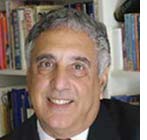
Donald H. Harrison
EL CAJON, California (Press Release)– Grossmont College has announced that Donald H. Harrison, creator of San Diego Jewish World, an online newspaper, has been selected as a new instructor for the class that produces the student newspaper called The Summit.
In addition to a print version of the student newspaper, Harrison says he is planning for a web-based “Griffin News Service” to feature a calendar of on-campus events, stories written by students and audio and video features.
Harrison has more than 40 years of experience in journalism. He was the managing editor of the Daily Bruin as a student at UCLA, and has worked for the Associated Press, San Diego Union and Los Angeles Herald-Examiner.
He also co-founded the San Diego Cruise Industry Consortium and the Old Town Trolley Tours company, and has authored Louis Rose, San Diego’s First Jewish Settler and Entrepreneur, which was published in 2004.
He also has served as editor of the San Diego Jewish Press-Heritage and a columnist with the San Diego Jewish Times.
*
Preceding provided by Grossmont College
 sdjewishworld